Make a Lemon Battery
Try this hands-on science activity at home:
When life hands you lemons, you can most certainly make lemonade—but you can also make a battery! With a few simple items you may already have at home, you and your family can create your very own lemon-powered battery. It’s a fun, safe way to learn about how chemical energy can turn into electrical energy.
DIY Lemon Battery
You will need:
-
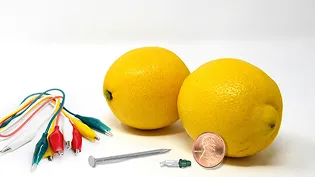
2 lemons (use more for extra power)
-
1 zinc nail
-
1 copper coin or a short piece of copper wire
-
2 alligator clip leads (found at most hardware stores)
-
A small, low voltage LED light (a single bulb from an old mini Christmas light works great–just remove the plastic base)
Instructions
Step 1:
Roll each lemon gently on a table to loosen up the juice inside, making sure you don’t break the skin. This helps the lemon juice act as a better electrolyte.

Step 2:
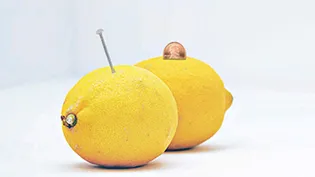
Insert the zinc nail into one lemon. Insert the copper coin or wire into the other lemon. (If you’re using a coin, you may need an adult to carefully cut a small slit in the lemon first.
Step 3:
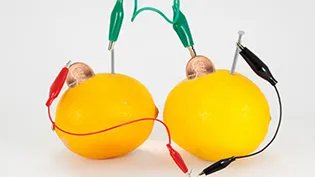
Use one alligator clip to connect the zinc nail to one end of your LED light. Use the second alligator clip to connect the copper coin or wire to the other side of the light.
- The zinc nail is your negative terminal.
+ The copper coin or wire is your positive terminal.
Tip: If the light doesn’t turn on right away, try reversing the clips on the light. You can also connect multiple lemons in a series (like a chain) to generate more power.
Step 4:
Watch your lemon battery in action!
What’s Happening Here?
This experiment shows how a chemical reaction can create energy without using batteries or outlets. The lemon juice contains acid, which helps move tiny particles called ions between the zinc and the copper. This movement generates an electric current.
Tips for Keeping Kids Safe Around Electricity
Keeping small children safe around electricity can seem daunting, but it’s not as difficult of a task as it seems. Here are a few tips to make your home safer for your little ones.
- Keep objects with cords away from areas with water
- Secure your unused outlets with plastic inserts
- Hide extension cords behind furniture
- Set electrical devices (such as DVD players or radios) on out-of-reach shelves or behind barriers like doors in an entertainment center
- Store kitchen appliances in cupboards, out of reach
- Always dry your hands completely before handling anything powered by electricity
- Educate kids about electricity in ways that are easy to understand. Explain to them the way that electricity runs through wires and powers the things in your home, and that it can flow through bodies and other materials that could cause shock or fire.
